
Contracts and checkout
Updated June 28, 2026
Build the rental agreement from the order the customer is actually receiving
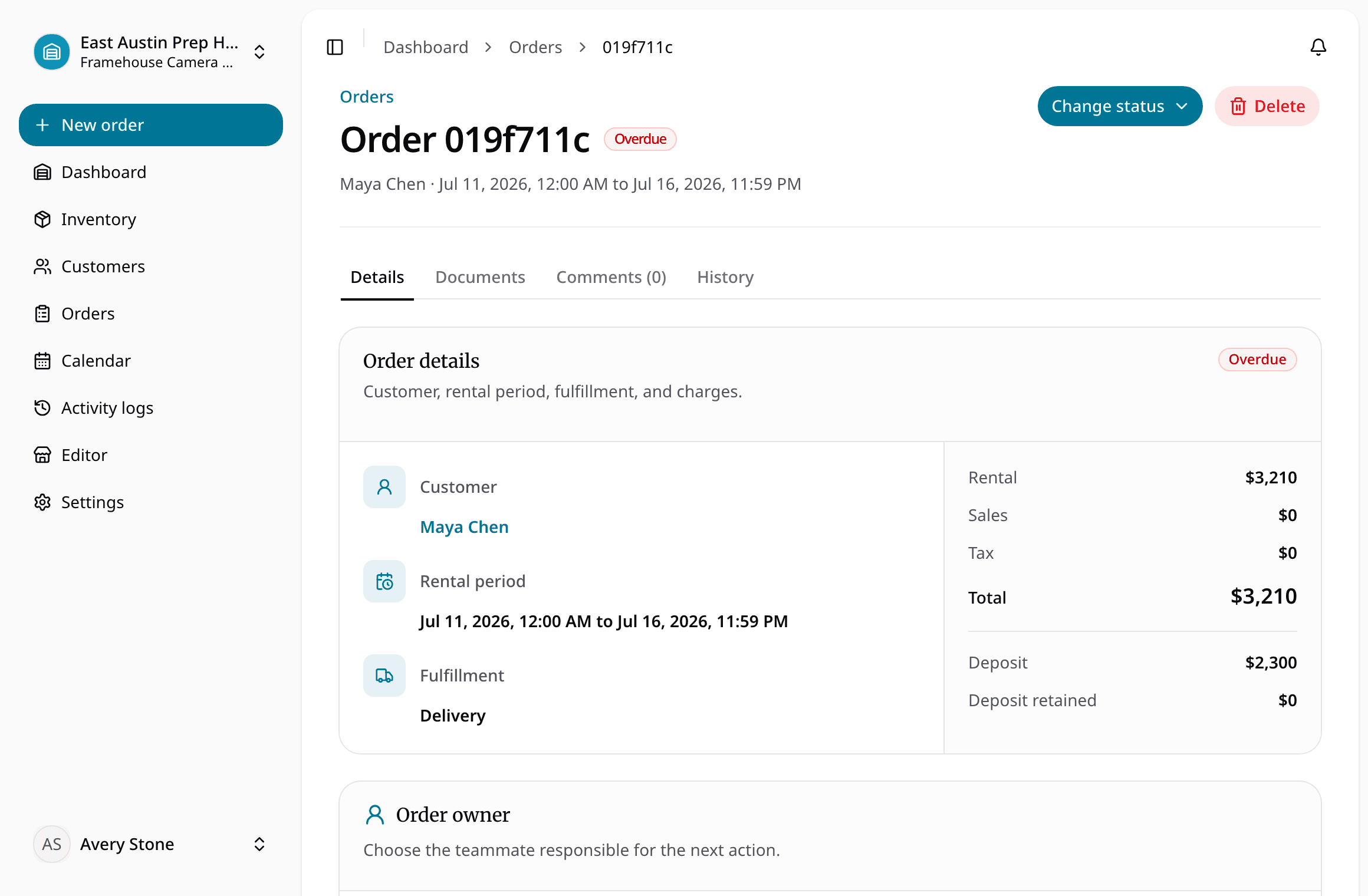
The document should reflect the live customer, date range, equipment, price, tax, deposit, fulfillment, and return expectations rather than repeat those details by hand.
Quick answer
Reviewed June 28, 2026
Make the customer, organization, order, date range, fulfillment method, and contact details unambiguous. Customer and business identity. Rental start and end.
01
02
03
Put the guide to work
Use the same checks inside RentalBench
Keep reading
More rental guides
Equipment Inventory Management Guide
Equipment Rental Website Template
Trailer Rental Business Checklist
Equipment Rental Insurance Checklist
Resource guide
Run this checklist in RentalBench
Tell us what is hardest about contracts and checkout today, and we can show you how RentalBench keeps the records out of separate sheets and notes.
Inventory, SKUs, and item status
Availability, reservations, and due-back dates
Orders, deposits, checkout, and returns
Prefer email? Reach us at hello@rentalbench.com. We reply directly.